
From Farm to Beer: How Hops Are Grown, Harvested, and Processed
A complete look at the journey of a hop cone, from the first shoot of spring to the pellet that ends up in your pint glass.
"Most people have held a cold pint and never thought about the plant behind it. But between that hop bine climbing a trellis in Michigan and the beer in your glass, there is an entire season of patience, precision, and craft."
The Life Cycle of a Hop Plant
Hops are perennial plants, meaning the same root system comes back year after year. Once established, a hop plant can produce for 20 years or more. What changes with each season is the bine, the long climbing shoot that grows from the crown, which is the underground root mass that survives the winter.
Understanding this cycle helps explain why hop farming is a long-term commitment. The first year is an investment with minimal yield. By the second and third year, the plant hits its stride. By year four or five, a well-tended hop yard is producing at full capacity.
New yards are planted from rhizomes, small root cuttings. Established yards are pruned, removing the first shoots of the season to encourage stronger growth from the bines that follow.
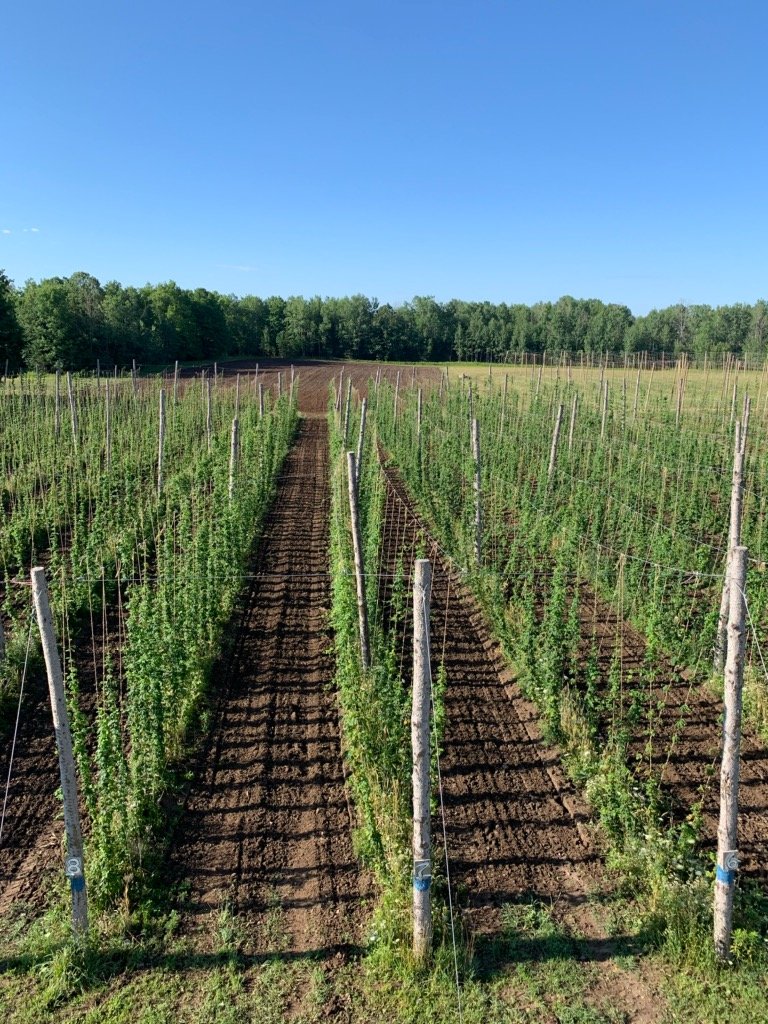
Bines grow fast, sometimes up to 30 cm per day in peak season. Growers train them to climb coir strings attached to a high trellis system, often 6 to 7 meters tall. The bines wind clockwise following the sun.
As daylight shortens after the summer solstice, the plant shifts from vegetative growth to reproductive mode. Cone formation begins, and the hop yard fills with the characteristic floral and herbal aroma.
Harvest timing is critical. Cones must be picked at peak lupulin development, the moment when the yellow powder inside the cone is at its most aromatic, and the alpha and beta acid content is highest. In Michigan, this window typically falls between late August and mid-September.
After harvest, bines are cut down, and the crown goes dormant through the winter. This rest period is essential for the plant to store energy for the next season.
Harvest: Manual vs. Mechanical
When harvest arrives, there are two paths a farm can take. The choice between manual and mechanical harvesting affects everything from labor costs to cone quality, and both approaches have their place in modern hop farming.
- Selective picking at peak ripeness
- Less physical damage to cones
- Better for small and specialty yards
- Higher labor cost per pound
- Allows variety-by-variety timing
- Entire bines cut and fed into machine
- Much higher throughput per day
- Lower cost at scale
- Standard for large commercial yards
- Requires precise timing across the block
At small farms like Alexander Farms, manual harvesting is a meaningful part of maintaining quality. When you pick by hand, you can leave behind cones that are not quite ready, and return for them days later. That level of precision is not possible with a mechanical harvester.
Drying: The Kiln Process
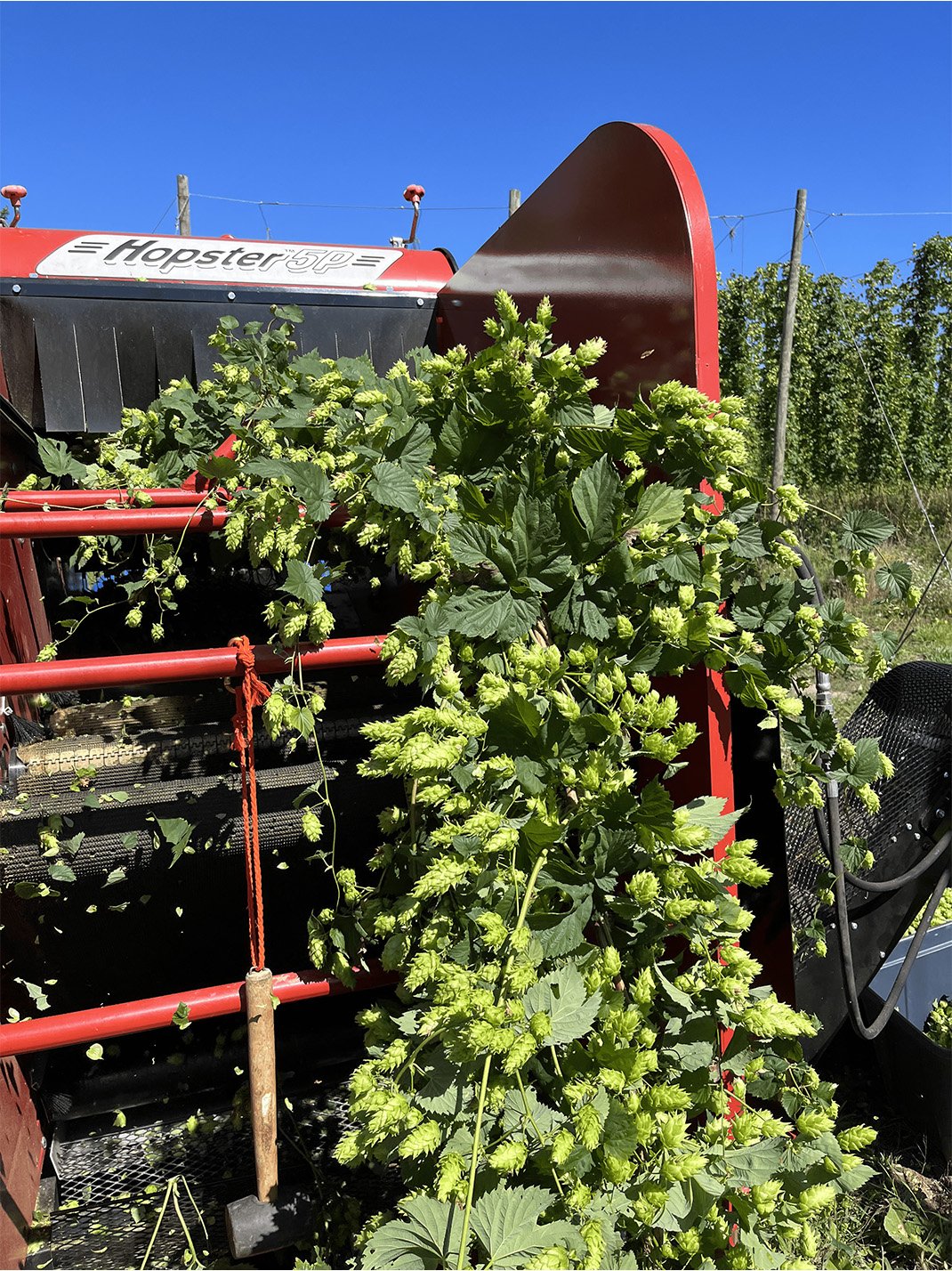
Fresh-picked hop cones contain about 75-80% moisture. Left as-is, they would mold and degrade within hours. The first step after harvest is drying, and this is where the kiln, also called an oast house in traditional terminology, comes in.
Cones are spread in thin layers on mesh floors, and warm air is circulated through them for several hours. The goal is to reduce moisture down to around 8 to 10 percent without applying so much heat that volatile aromatic compounds are driven off. Temperature control at this stage is everything: too hot, and you lose the delicate floral and citrus notes; too cool, and drying takes too long, risking mold.
The kiln is where the character of a hop is either preserved or lost. All the work of the growing season can be undone in a few hours of improper drying.
From Dried Cones to Pellets
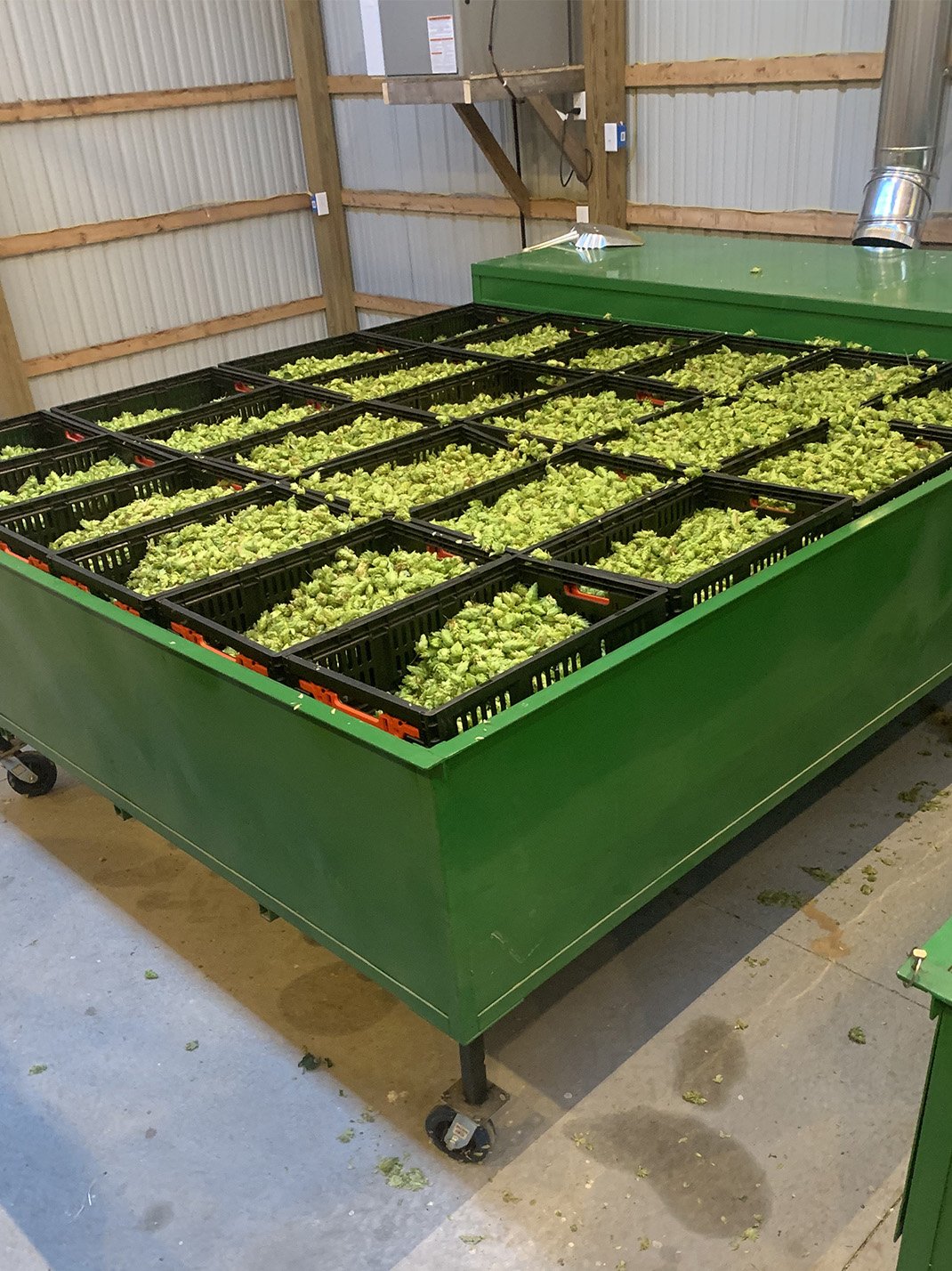
While some breweries use whole, dried cones, most commercial hops are processed into pellets. Pellets are more stable, easier to store, ship better, and dose more precisely in the brew kettle. The process of making them is straightforward but requires controlled conditions.
One key advantage of pellets worth noting for brewers: because the lupulin glands are ruptured during milling, pellets tend to have slightly higher utilization rates than whole cones in the kettle. You can achieve the same bitterness and aroma with a lower hop weight.
Why the Farm Matters to the Brewer
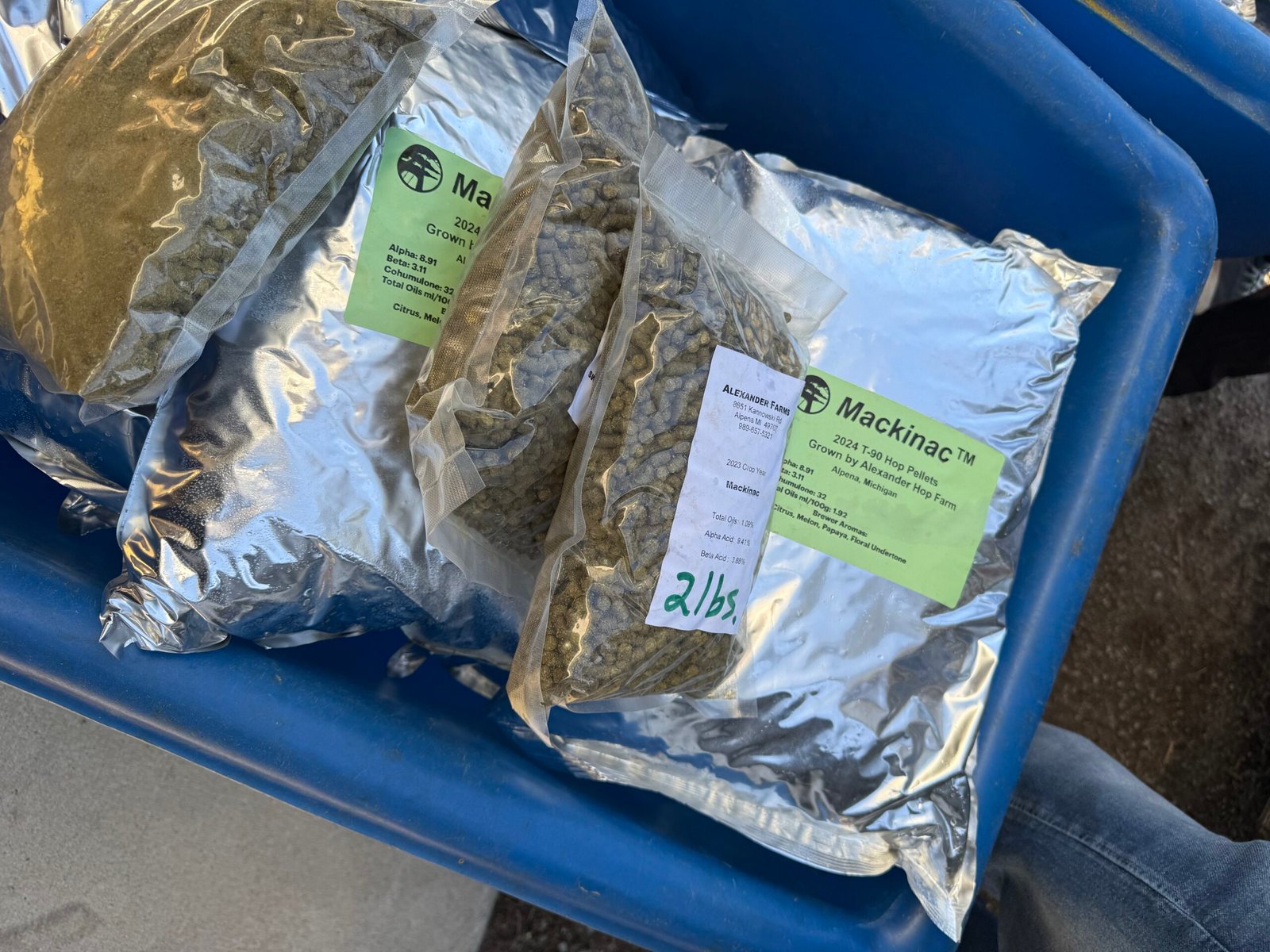
Understanding this process changes how a brewer thinks about hops. Every bag of pellets represents months of decisions made in a field: which bins to train, when to pick, how long to dry, how fast to process. When you know that story, you use the ingredient differently.
At Alexander Farms, the proximity between the growing and processing steps is intentional. Hops that go from vine to kiln within hours of picking retain aromatics that degrade quickly after harvest. That speed from farm to processing is something large commercial operations and shipping from distant states cannot replicate.
For the craft brewer seeking complexity and local character, this is the practical argument for sourcing Michigan-grown hops. It is not just about geography. It is about the direct line between a specific field and the beer in the glass..
See the Farm Behind the Hops
Interested in sourcing directly from Alexander Farms? We work with craft breweries of all sizes and offer full transparency on our growing and processing practices.
Get in Touch